
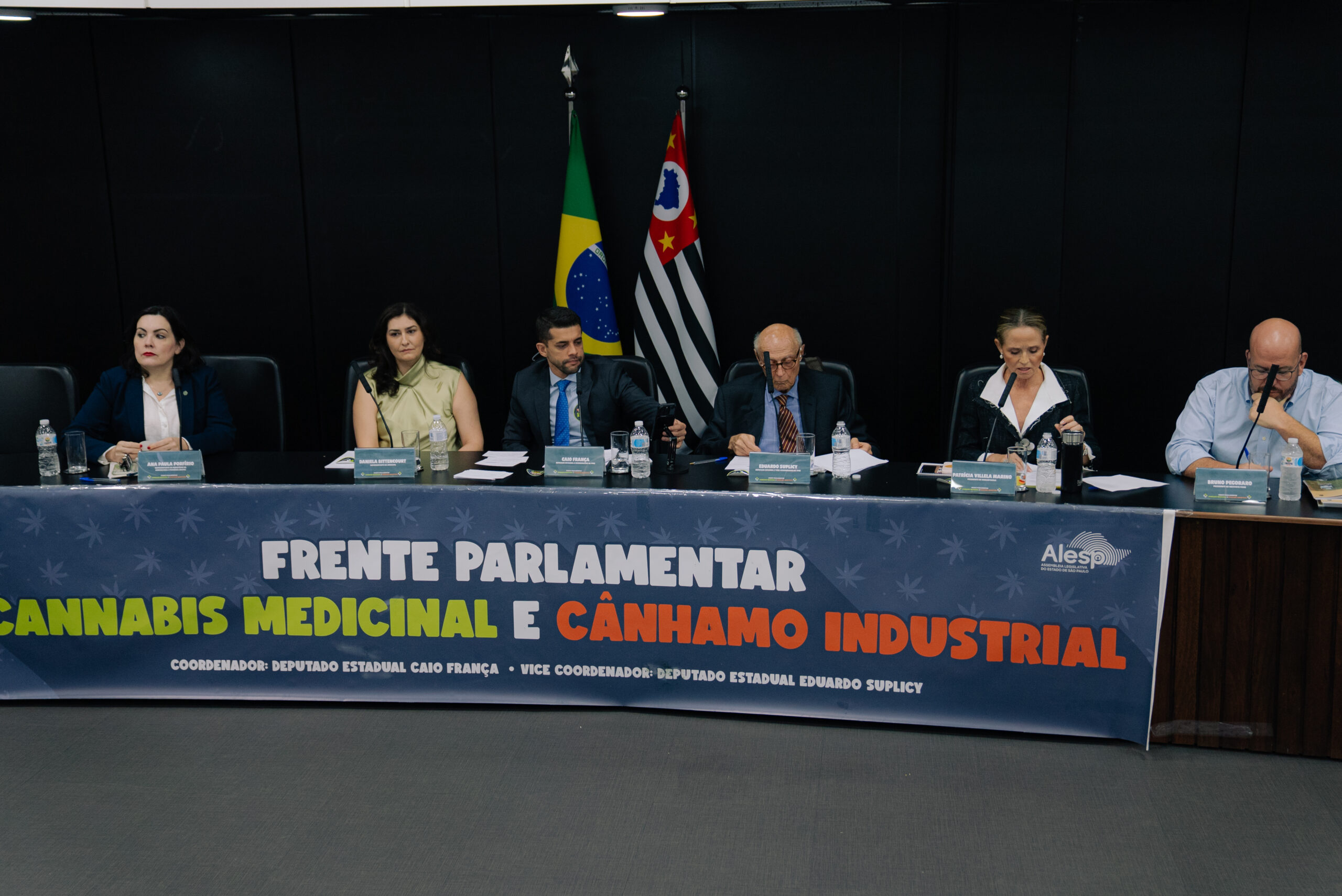
The following article, penned by the president of the Humanitas360 Institute, Patrícia Villela Marino, and State Representative Caio França (PSB-SP), was originally published in the Folha de S.Paulo newspaper on December 16.
The recent decision by Minister Flávio Dino of the Federal Supreme Court, ordering the Federal Police to investigate irregularities in the allocation of R$ 72.3 million in federal parliamentary amendments, reignites a crucial debate for Brazilian democracy: how can we ensure that public resources are applied with transparency and legitimacy?
In contrast to the irregularities identified by the Supreme Court, the Medical Cannabis and Industrial Hemp Parliamentary Front of the São Paulo State Legislative Assembly demonstrates how public resources can be used responsibly, judiciously, and aligned with the collective interest.
Recently, the front announced the winners of its 3rd Amendment Call for Proposals. Project selection did not occur through political whim or obscure interests, but through a deliberative council composed of physicians, pharmacists, researchers, and subject-matter experts.
This technical screening establishes an essential barrier against the discretion that fuels misappropriation. Meanwhile, the so-called Pix amendments at the federal level have become a symbol of a practice that, when lacking adequate controls, perpetuates deviations that violate the law and erode citizens’ trust in institutions.
The contrast is evident. While investigations by the Office of the Comptroller General reveal a “widespread pattern of illegalities” in municipalities that received tens of millions in federal amendments, the São Paulo parliamentary front, coordinated by state representatives Caio França (PSB) and Eduardo Suplicy (PT), allocated R$ 1.25 million to eight carefully selected projects. This is not merely a quantitative difference in amounts, though this is significant, but a qualitative difference in the understanding of what it means to serve the public.
The selected projects represent institutions of recognized standing: the Heart Institute (InCor) of Hospital das Clínicas will conduct unprecedented research on medical cannabis in cardiac patients; UFSCar will investigate hemp’s role in sustainable agriculture; Unesp campuses in Botucatu and Ilha Solteira will develop pioneering veterinary studies.
Added to these academic initiatives are municipal programs in Pereira Barreto and Peruíbe, social projects such as that of the Psicocannabis Association, aimed at reintegrating women released from the prison system, and professional training by Turma do Bem.
What fundamentally distinguishes this initiative from the practices questioned by the Supreme Court is the existence of a robust deliberative process. Transparency here is present at every stage: public call for proposals, defined criteria, peer review, broad dissemination of results.
It represents recognition that public resources require public scrutiny, and that the legitimacy of a parliamentary amendment lies not only in its formal legality, but in its capacity to address genuine social needs through solid and trustworthy institutions.
Patrícia Villela Marino, attorney and President of the Humanitas360 Institute.
Caio França, State Representative (PSB-SP) and author of the São Paulo law that includes medical Cannabis in the public health system.



'/%3E%3Cpath%20fill='%23b2b2b2'%20d='M241%20382q0%2016%2017%2026%2017%2011%2042%2011t42-11q16-11%2017-26V269H241'/%3E%3Cpath%20fill='%239f7e00'%20d='M241%20379q0%2014%208%2023%209%209%2021%209%2014%200%2021-9%209-9%209-23V269h-59'/%3E%3Cpath%20d='M241%20339v-70h59v110q0%2014-9%2023l-6%205v-68h-15v72q-8%200-14-4v-68zm59%2040c0%2022%2015%2032%2029%2032%2021%200%2030-18%2030-32v-40h-59'/%3E%3Cpath%20fill='%239f7e00'%20d='M266%20277v5h2v12h-3v-5h2v-5h-9v5h2v5h-4v9h3v18h-5v10h34v-10h-5v-18h3v-9h-4v-5h2v-5h-9v5h2v5h-3v-12h2v-5zm42%20101q0%2010%206%2017%206%206%2015%207%2010-1%2016-7%206-7%206-17v-29h-43'/%3E%3Ccircle%20fill='%230044ad'%20cx='329.5'%20cy='372'%20r='6'/%3E%3Cellipse%20fill='%230044ad'%20cx='300'%20cy='340'%20rx='16'%20ry='21'/%3E%3C/svg%3E)