
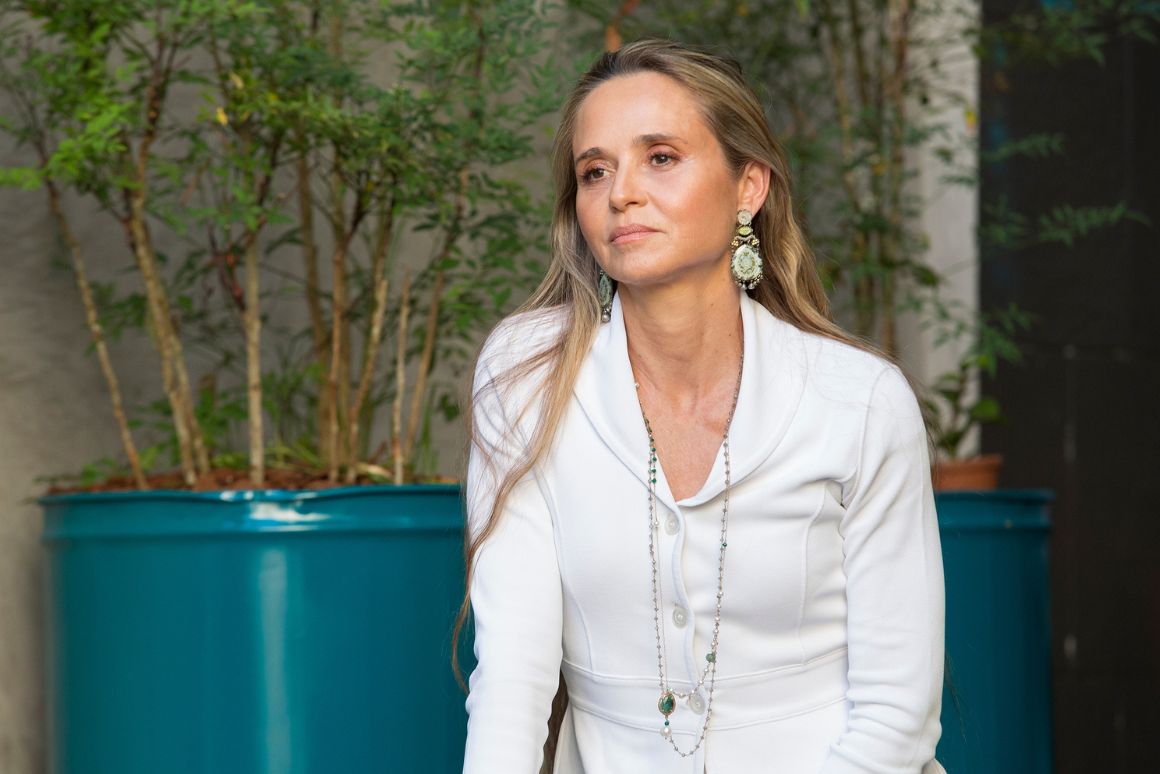
The article below, signed by the president of the Humanitas360 Institute, Patrícia Villela Marino, was originally published in the Correio Braziliense newspaper on December 21st.
For years now, I’ve been saying: in Brazil, there is no life imprisonment, but there is the perpetuity of punishment. We must repeat this, insist on it, hammer this idea home until society understands how true — and how dangerous — it is.
Riding the wave of penal populism, São Paulo’s governor, Tarcísio de Freitas, recently advocated for adopting life imprisonment in Brazil. “I don’t think it’s absurd at all,” he said, even proposing a 2026 referendum to amend the Federal Constitution. He did so while praising El Salvador’s president, Nayib Bukele — a symbol of contemporary penal authoritarianism, accused of systematic human rights violations in the name of “public safety.”
But let’s be honest: life imprisonment already exists informally in Brazil. It happens when people are hit with unpayable fines after serving their prison sentences; when stigmas are perpetuated; when convicted individuals are denied opportunities to study and work to rebuild their lives. This silent perpetuity is exacerbated by policies that merely pile up bodies, fed by the fallacious disinformation that longer sentences bring peace. At the other end of the social pyramid, sentences are outrageously reduced through the abuse of financial power to release wealthy people through habeas corpus, while the poorest continue rotting in jails even after serving their sentences.
If increasing sentences were the solution, we’d be one of the world’s safest countries. After all, we have the third-largest prison population on the planet. But reality tells a different story. We live in a cycle of violence that exhausts us at every moment of our days. Desperation leads us to want miracle solutions, opening space for populist politicians to assume messianic positions, selling punitive proposals to avenge the weary souls of the population. This has a name: manipulation.
The “zero tolerance” policy that inspires various leaders has been covertly applied in Brazil. Lethal operations are celebrated as necessary despite their inefficiency. But it’s intelligence operations like Carbono Oculto that uncover the criminal networks causing our profound exhaustion. The state must assert its monopoly on the use of force and its intelligence and technological capabilities to unravel entire criminal networks, from bottom to top of the pyramid. But it’s at the top where interests are contradictory and many investigations remain inconclusive. Banco Master and Refit are examples of this. Meanwhile, the population is instigated to believe in empty promises like a referendum on the death penalty.
The focus of public safety cannot be diverted to scapegoats. The obsession with mass incarceration of the most vulnerable population diverts resources and attention from pursuing the major corruption and money laundering schemes that corrode society. Trafficking, militias, and organized crime complement each other in a sordid chain of violence, often difficult for ordinary citizens to understand. It’s in this scenario that the population’s desperation with street violence opens space for the political class’s penal populism. It’s a cynical game that uses people’s pain as a stage for promises that, in practice, only serve to maintain the status quo of impunity at the top and repression at the bottom.
Let’s be frank: we are all exhausted by our violence rates. But, in this exercise of honesty, we must ask: where are the true perpetrators of the violence that oppresses us? Recent investigations reveal that many of them are closer than we imagine — not in cells, but at glamorous events, in circles of influence, in power structures.
Continuing to pile up bodies, increasing sentences without thorough investigation and without reintegration policies only strengthens organized crime. Criminal factions are born and fed in prisons — and by denying a second chance to those about to be released, the state delivers that person to crime’s recruitment.
The perpetuity of punishment is already among us. The challenge now is to prevent it from becoming, through an authoritarian stroke of the pen, even more formal, even more cruel — and even less just. Our Constitution was drafted still under dictatorial airs that don’t dissipate easily or quickly. We’ve just experienced an unprecedented trial in Brazil’s history. Changing the Constitution in these terms seems to me like returning to a Brazil that never needs to be lived again.
Patrícia Villela Marino – Lawyer and President of Humanitas360 Institute