
The article below, written by Fernanda Simon, was published by Vogue Brasil on February 13.
From Prison to Leadership: How Fashion Can Drive Social Change Through Employment and Emotional Support
By Fernanda Simon
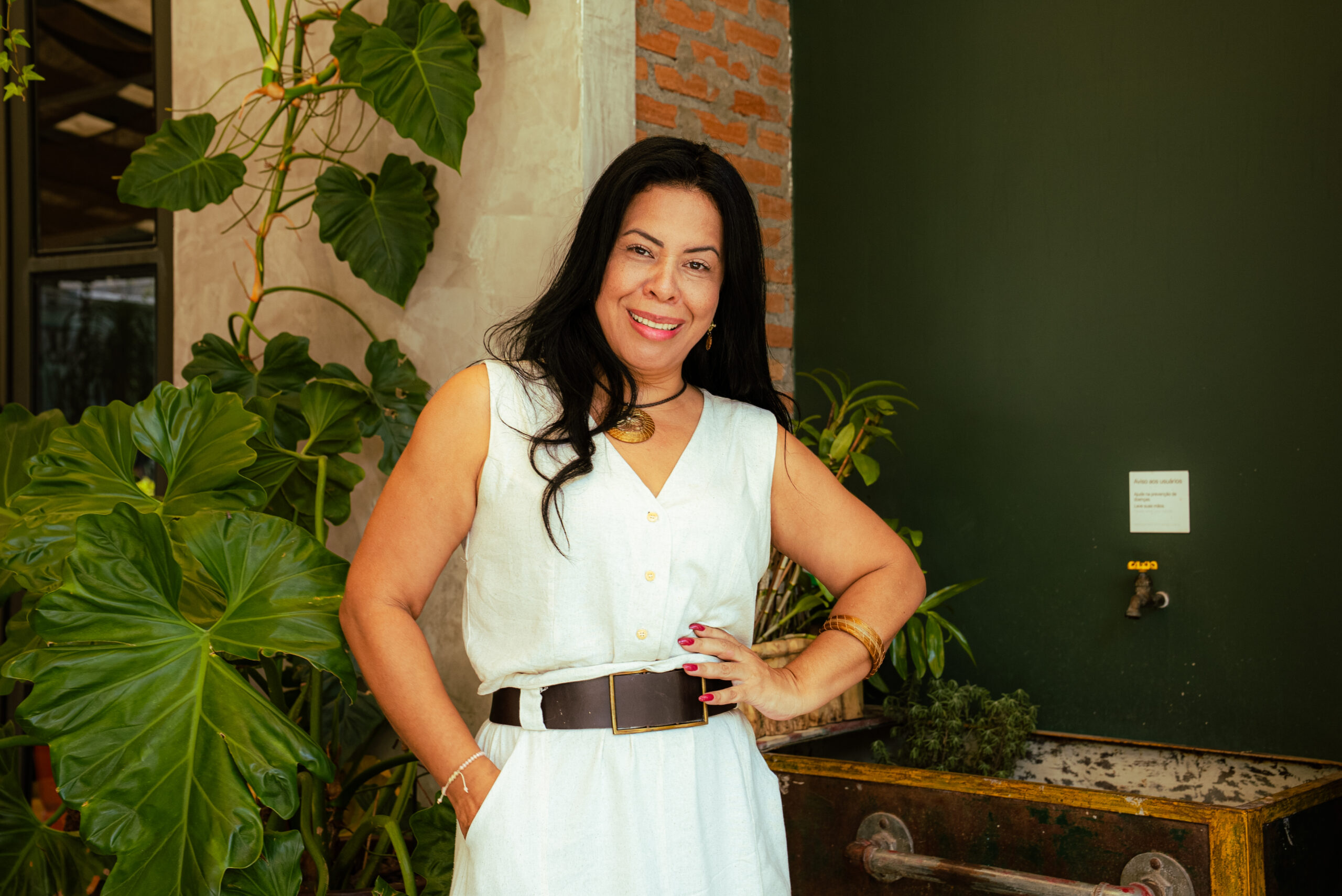
Flávia Maria da Silva was born on the outskirts and, at a very young age, got involved with a drug dealer who was later killed, leaving her alone with a small child. Without emotional support and with few prospects, she ended up joining the drug trade and was sentenced to 22 years in prison, of which she served 11. In 2018, while still incarcerated, she came across a civic-social entrepreneurship project for women in the prison system, presented by lawyer and philanthropist Patrícia Villela Marino, president of the Humanitas360 Institute. “That’s where it all began. The project started out selling products developed by cooperatives inside the prison system. Later, it became a social brand that reached the world,” says Flávia.
That is how Tereza came to be — a social business with the purpose of generating social impact through work and training, offering income generation, dignity, and new opportunities for women who face enormous barriers upon leaving the prison system. “For Tereza, success will not be measured by revenue alone. Our true success will lie in the zero criminal recidivism rate among the women who go through our social business and in the growth of female leadership within our team. Every year, we want to develop more leaders than products. Each piece sold is a step toward breaking the cycle of invisibility and poverty,” says Flávia, who is currently Tereza’s CEO.
The brand produces accessories such as bags and wallets, and recently launched its first clothing item: a hand-embroidered kimono made from hemp fabric. Beyond its social and economic vision, Tereza seeks to work with low environmental impact raw materials, reinforcing the importance of sustainability throughout its operations.
Tereza is part of the ecosystem of organizations supported by the PDR Philanthropic Fund, which includes the Ficus Institute, an active advocate for hemp regulation in Brazil, and Humanitas360 itself. This focus on sustainability from the raw material stage drove the choice of hemp fiber.
The stories of the women who make each piece are front and center, as each label features real accounts from the women who produced them, revealing not only their personal experiences but also the marks left by the social inequality that still persists in this country. “Each piece we produce carries a story of transformation. The hemp kimono represents our commitment to the positive social impact we want to generate through our work,” says Flávia.
According to Flávia, one of the greatest challenges faced by formerly incarcerated women is regaining a sense of belonging, as the label of ex-convict follows them and makes social reintegration difficult. In this context, Tereza works not only to reduce inequalities by offering employment and professional training, but also emotional support, enabling these women to reclaim their lives with autonomy and dignity. The brand also provides corporate materials for companies, such as bags, wallets, and laptop cases, generally made from recycled materials, and has already established partnerships with brands such as Vult Cosméticos, Jogê, and Irá Salles.
The initiative’s very name carries a powerful metaphor. “Tereza” is the term prisoners use for improvised ropes made from knotted bed sheets, used in escape attempts. This symbolism is reframed to represent a path to freedom — not temporary or illegal, but legitimate and permanent, built through work and inclusion.
Tereza is an example of a social business driven by the purpose of change, and it shows that it is possible to create fashion products that directly and positively impact society. “Today, my role is to do for others what was done for me: give opportunities to transform lives, just as mine was transformed,” Flávia concludes.
Visit the Tereza Store & Workshop
Rua Dr. Virgílio de Carvalho Pinto, 362 – Pinheiros – São Paulo
Monday through Friday, 10 AM to 5 PM