
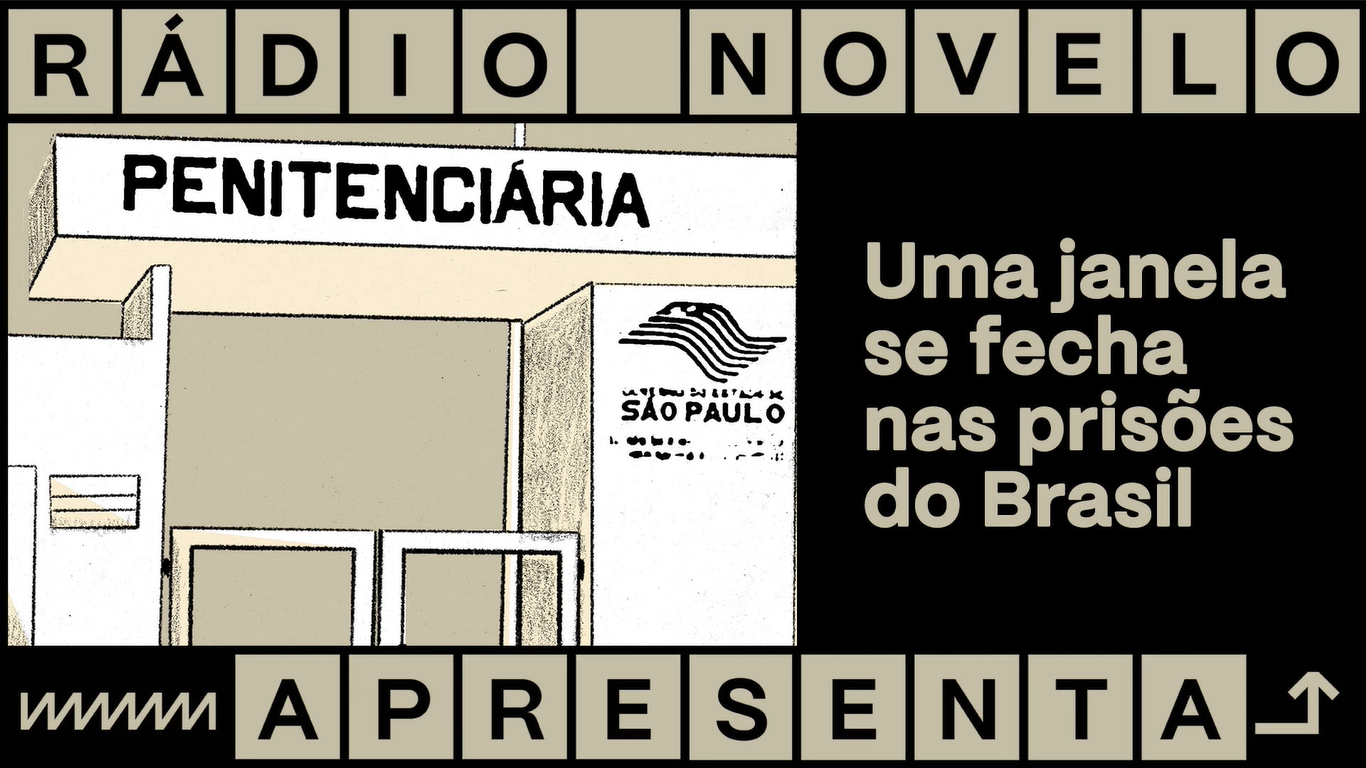
Released last Thursday (15th), the episode “Sem saída” (No Way Out) of the podcast Rádio Novelo Apresenta reveals the reality of prison furloughs in Brazil’s correctional system, beyond the myths spread by penal populism. In addition to highlighting initiatives by the Humanitas360 Institute and social enterprise Tereza, the report follows women in semi-open regime who experience this threatened right, bringing voices and stories that rarely gain space in public debate about incarceration.
To produce the episode, reporter Bia Guimarães accompanied, in June 2025, the support action promoted by H360 at Tremembé Women’s Penitentiary II, part of the “Green Doors: Temporary Leave” project. The initiative offers humanized support to incarcerated individuals, with donations of clothing and food, breakfast, and legal guidance, recognizing the difficulties faced by those who leave prison without resources or basic information about their rights.
The program features interviews with Flávia Maria da Silva, current CEO of Tereza, and Patrícia Saraiva, who collaborated at Tereza Store & Workshop until 2025. Both are formerly incarcerated women who share their journeys, highlighting the challenges of social reintegration and the importance of initiatives that offer dignified work and real opportunities for a fresh start.
Told with sensitivity and honesty on Rádio Novelo Apresenta – a benchmark podcast program in Brazil – their stories illustrate how the absence of adequate support can perpetuate cycles of vulnerability and exclusion. On the other hand, they reveal the importance of social enterprises that train and generate income for formerly incarcerated women – in Tereza’s case, through sustainable fashion.
Another Humanitas360 project highlighted in the episode is “I’m Free, Now What?“, a video series on TikTok featuring collaborators from the Institute and Tereza who are formerly incarcerated. Released in 2024, the series presented practical information about the rights and responsibilities of people who had left (or were about to leave) prison, from document regularization to access to social benefits, democratizing essential knowledge for rebuilding lives with autonomy and dignity.
Narrated in Portuguese, the episode is available below on YouTube, on Rádio Novelo’s website, or on your preferred podcast player.