
Patrícia Villela Marino
President of Humanitas360 Institute
For over twenty years, I have lived with life stories crossed by the Venezuelan crisis. Venezuelan citizens of various social strata, whom I met in my civic-social activism and in my personal life, had their routines interrupted by political repression and forced exile. I met mothers without access to medicine to treat their children, political prisoners, families separated by borders and fear.
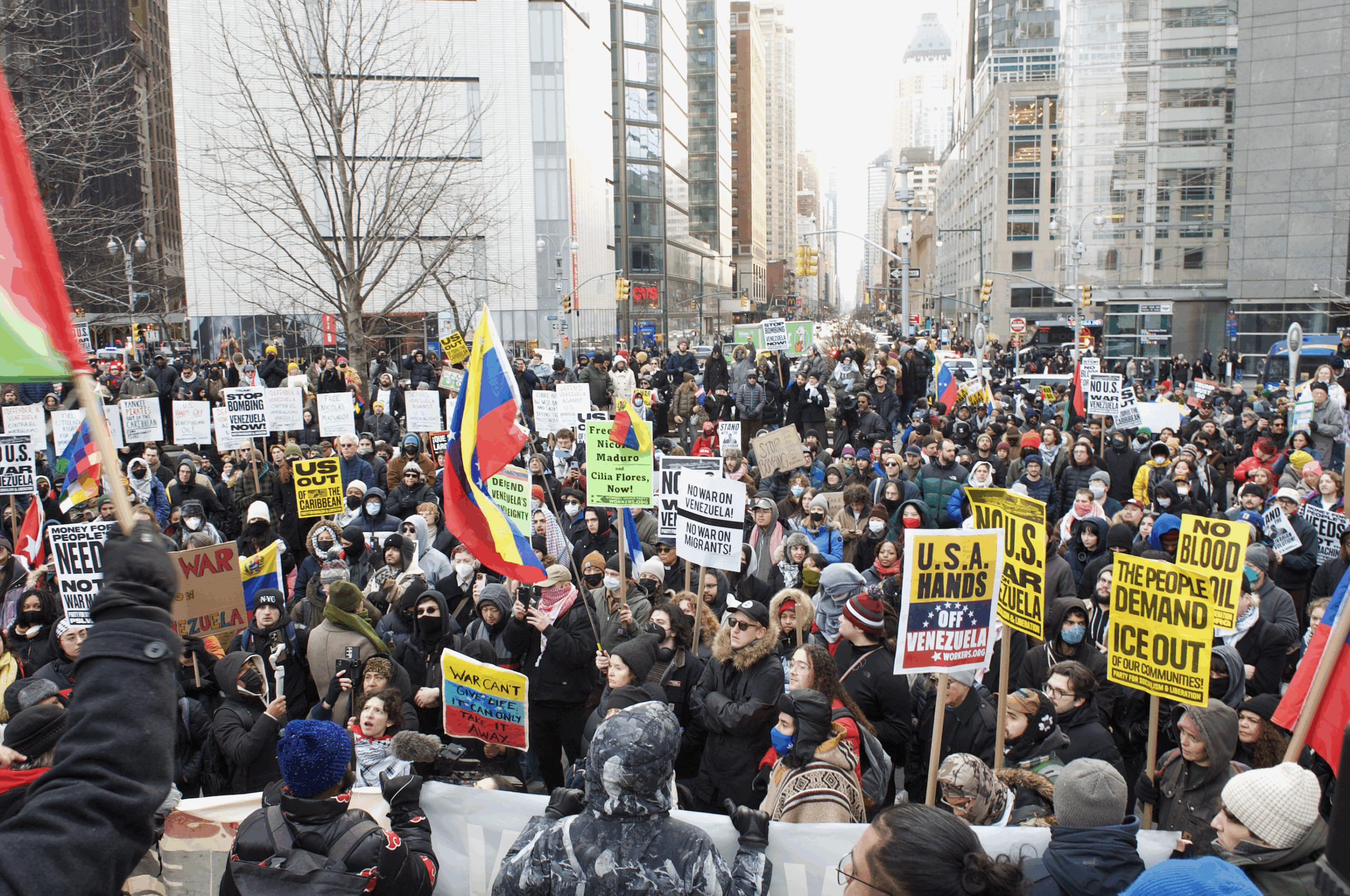
To recognize the gravity of the authoritarianism and state violence perpetrated by Nicolás Maduro, and before him Hugo Chávez, is an ethical duty. But this does not mean endorsing military adventures like the one the US started this week. External interventions and rhetorics like this merely update the old script of neocolonialism. There is no easy solution for what Venezuela is experiencing today.
Latin America has seen this film before. Throughout the 20th century, the “war on drugs” and the “defense of democracy” were used by various North American governments as justification for the militarization and violation of laws and rights on our continent. The United States played a central role in sustaining dictatorships, financing coups, repressing popular movements, and building a security logic that always treated Latin America as a sacrifice zone. Venezuela, with its geopolitical, economic, and human complexity, cannot be the territory of this unfortunate return to the past.
Over the past two decades, I have been alongside Venezuelan opposition leaders who now live in exile, some after direct imprisonment or persecution. Partly because of this, in 2016, I was recognized with the Bravo Business Award, granted by the Council of the Americas, in the Humanitarian of the Year category. I received the honor as a symbol of a collective effort: the attempt to expand the space for citizenship in various Latin American countries, focusing on difficult topics, such as drug policy reform and the promotion of democratic participation mechanisms. What was at stake at that time, and is more current than ever today, is the right of people to express themselves, to live with dignity, and to decide the future of their countries.
The Venezuelan crisis has a face, a name, and a history. It will not be resolved with external formulas, but with the slow and difficult reconstruction of social and institutional trust. And this will only be possible with the Venezuelan people at the center of the process, not as spectators, but as subjects of their own history.
Therefore, I reaffirm that any solution to the Venezuelan crisis cannot come from military force nor from decisions imposed from outside in. The answer needs to come from the Venezuelan people themselves – especially those who, forced into exile, today form an active diaspora profoundly committed to the reconstruction of the country.
For more than two decades, I have followed thinkers, leaders, and activists who, even away from their land, continue to study, elaborate, and prepare paths for the reconstruction of the nation, its institutions, and its democratic life. They keep alive, as an act of resistance, the hope of a dignified return, capable of repairing the violence suffered. In this context, I cite the work of Professor Ricardo Hausmann, dedicated to the formulation of a reconstruction plan for Venezuela, as well as the trajectories of Yon Goicoechea, David Smolansky, Manuela Bolívar, Lilian Tintori, among many other names committed to the democratic recovery of the country.
More than ever, we need to reaffirm that solidarity is not tutelage. That sovereignty is not selectively negotiated. And that democracy is not imposed — it is built. With time, with listening, and with people willing to sustain this process with courage and responsibility.