The following article, written by Humanitas360 Institute president Patrícia Villela Marino and Instituto Escolhas executive director Sergio Leitão, was originally published in the newspaper O Globo on April 5.
Every Day Can Be Agribusiness Day
By Patrícia Villela Marino and Sergio Leitão
Brazilian agribusiness has plenty to celebrate every day: the country has been the world’s largest soybean producer since 2019, agriculture accounts for nearly half of all exports, and feeds hundreds of millions of people across dozens of countries. Without exaggeration, Brazil’s farmland is one of the most powerful engines of the global economy. But every engine needs maintenance — and ours is showing signs of wear.
Recent data from Instituto Escolhas shows that soy’s dominance has been sustained more by increased use of chemical inputs than by real productivity gains. In 1993, one kilogram of pesticide yielded 23 bags of soybeans; by 2023, that figure had fallen to just seven. The same pattern holds for fertilizers: one metric ton yielded 517 bags in 1993, compared to 333 in 2022. Production costs have risen in lockstep: in 2013, farmers needed 11 bags per hectare to cover spending on seeds, pesticides, and fertilizers; by 2023, that number had jumped to 23. No one questions agribusiness’s success. But there is reason for concern: the current model is quietly eroding the income of those who produce the most, harvest after harvest.
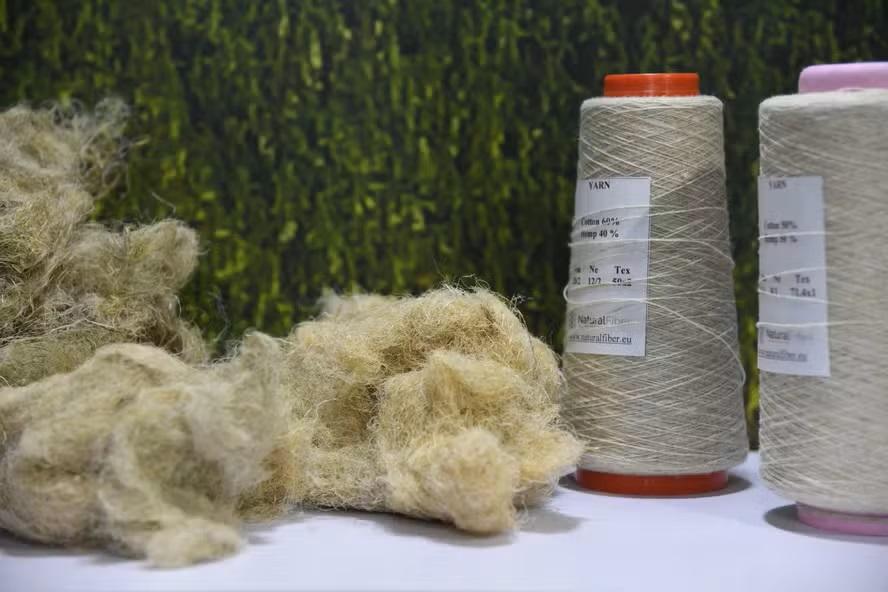
Where do alternatives come in? One of the least-discussed options in Brazil — yet highly promising elsewhere — is industrial Hemp. According to international estimates, Hemp moves between $5 billion and $7 billion globally, with projected annual growth of 16% to 24% over the next decade. More than 60 countries have already regulated its cultivation: Canada, China, the United States, France, Colombia, Paraguay, Uruguay… The list is long, and Brazil is not on it.
What makes Hemp especially attractive to Brazilian farmers are its concrete agronomic benefits. Rotated with soybeans, corn, and wheat, Hemp boosts the following season’s productivity by 10% to 20% by regenerating soil and breaking pest cycles. It requires few pesticides, uses roughly 75% less water than cotton to produce the same amount of fiber, and captures carbon at levels comparable to a growing forest.
France, Europe’s largest Hemp producer, illustrates this potential well. With just 21% of the world’s cultivated Hemp area, it accounts for 47% of global Hemp fiber production — achieved without pesticides and with strong participation from local cooperatives.
Yes, in Brazil Hemp carries the burden of being mistakenly associated with psychoactive cannabis. But the UN’s Single Convention on Narcotic Drugs itself distinguishes industrial cultivation — for fiber and seeds — from psychoactive use. In 2024, Brazil’s Superior Court of Justice ordered health regulator Anvisa to regulate the cultivation of medicinal cannabis with up to 0.3% THC, the same threshold that defines industrial Hemp worldwide. In January 2026, Anvisa complied and approved five resolutions authorizing regulated cultivation in the country.
It is a first step. But full industrial use — for fiber, seeds, and derivatives — still requires its own regulatory framework. Relevant bills are currently moving through both the Chamber of Deputies and the Senate. The question is no longer whether Brazil will regulate Hemp, but when — and whether it will act in time to avoid missing a competitive window that dozens of countries are already seizing.
Soybeans, which occupy 47.5% of Brazil’s cultivated land, do not need competitors. They need partners. Industrial Hemp is a complementary crop that strengthens soil, reduces input costs, and opens markets across sectors as diverse as construction, textiles, food, bioplastics, and cosmetics. It can be part of an innovation agenda that directly benefits farmers.
Every day can be agribusiness day. But let it be an agribusiness that is increasingly diversified, more sustainable, and full of more options — for those who produce and for those who consume. Brazil has the soil, the climate, the agricultural tradition, and the scale to lead this frontier. What remains is the decision to open the gate.
Patrícia Villela Marino is a lawyer and president of the Humanitas360 Institute. Sergio Leitão is a lawyer and executive director of Instituto Escolhas.