
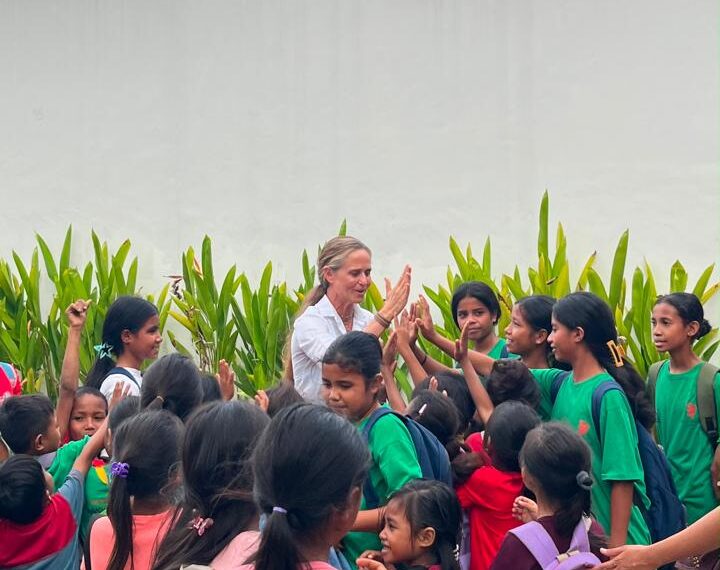
During a trip to Indonesia in July, the president of the Humanitas360 Institute, Patrícia Villela Marino, visited the island of Sumba to see firsthand the work of Roswita Asty Kulla, an educator and social entrepreneur who is transforming her community through two complementary initiatives. The trip revealed areas of work that resonate deeply with the causes championed by H360 — from women’s empowerment to access to basic rights such as education, income, and clean water.
The first of these is English Goes to Kampung (EGK), founded by Asty in 2015. What began with a young teacher visiting remote villages to teach English and basic life skills to children with no access to school has grown into a community initiative that has already reached more than 8,000 young people across all four districts of Sumba, supported by over 80 volunteers. On an island that ranks among the most beautiful and, at the same time, poorest in Indonesia, EGK bets on education as a way to break persistent cycles of poverty. During the visit, Patrícia got to know the educational space and the children the project serves.
The second is Karaja Sumba, also founded by Asty, which preserves the ancient art of ikat — a traditional Sumbanese textile that takes months to produce — while generating income and financial independence for the “mamas,” women who are survivors of domestic violence. By purchasing the pieces upfront and at a fair price that values the entire handcrafted process, Karaja creates real opportunities for these women to support their families and escape the cycle of violence and poverty. This purpose directly echoes the journey of Humanitas360’s social cooperatives and of the social business Tereza — now independent — which generates income for formerly incarcerated women through cutting and sewing. In both contexts, entrepreneurship proves to be a tool for awareness, autonomy, and dignity.
The visit also shed light on the work of the Sumba Foundation, a partner of these initiatives, which since 2002 has been building water systems for local communities — protecting wells and springs from contamination and bringing clean water directly to the villages. The results are significant: more than 48,000 people have benefited from access to clean drinking water, and malaria has been nearly eradicated in West Sumba, where some clinics go months with zero recorded cases. Joining the delegation, Daniel Villela Marino — co-founder of the PDR Philanthropic Fund alongside his parents, Patrícia and Ricardo Villela Marino — devoted himself to volunteer work with the communities, reinforcing the family’s commitment to social and environmental causes in different parts of the world.
That commitment finds an echo in Brazil through the Potable Water for Indigenous Peoples Coalition, created by Humanitas360 with its supporter, the PDR Philanthropic Fund, and the startup Água Camelo. In September 2025, the coalition completed the delivery of large-scale filters to the Paiter Suruí people, ensuring treated water for all the main villages of the Sete de Setembro Indigenous Land, in Rondônia and Mato Grosso. From the island of Sumba to the villages of the Amazon, the meeting of these initiatives reaffirms a conviction that guides H360’s work: when communities have access to education, income, and basic rights, they transform not only their own lives, but the future of everyone around them.