
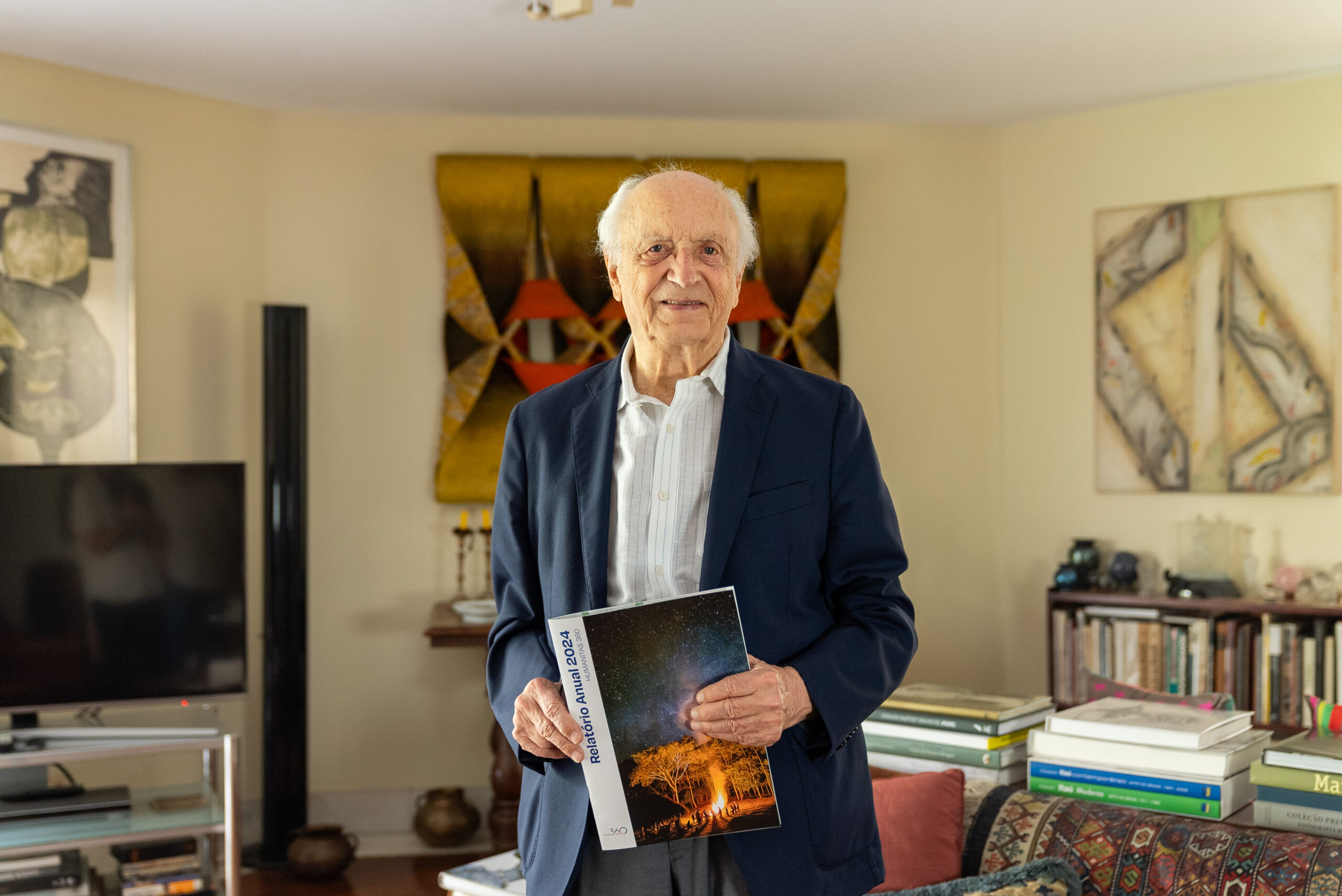
The following interview, conducted by Alice Ferraz and Daniel Fernandes with the President of the Board of the Humanitas360 Institute, Ambassador Rubens Ricupero, was originally published in the newspaper Estado de S. Paulo on June 3rd.
Rubens Ricupero served as Brazil’s Ambassador to the United States from 1991 to 1993. He also brings the accumulated experience of having served as Minister of Finance during the implementation of the Plano Real, in 1994.
He is, therefore, a highly qualified voice to comment on the latest American move, which may impose a 25% tariff on Brazilian goods. Times have certainly changed, but the diplomat’s analysis is sharp: “I can see from Marco Rubio’s statements — the U.S. Secretary of State — that the motivation is clearly political.”
Brazil as a U.S. adversary
Ricupero points out that Rubio’s statements before the U.S. Senate made clear which countries are most aligned with the United States and which are not — placing Brazil in the latter group, alongside, for example, Venezuela, Nicaragua, and Cuba.
Faced with this scenario, the former minister is far from optimistic. “I see the problem as very complicated; there is clearly a political component that makes things more difficult,” he concludes.
Ricupero recalls that trade negotiations between countries normally proceed on the basis of objective criteria — the technical staff on each side are even capable of calculating the impact of tariff increases, reductions, or exemptions. “It’s not difficult,” he says.
But, he argues, everything becomes more complicated when there is an elephant in the room — in this case, the political component.
“The political relationship is not good, nor could it be.” Ricupero is referring to the ideological gulf between Lula and Donald Trump. The Brazilian president, in his view, is a center-left politician, while the American leader is far right. “Lula and Trump are at opposite ends of the spectrum.”
Ricupero recently contributed an analytical essay to the book On the 120th Anniversary of Afonso Arinos de Melo Franco, a collection of essays by Brazilian intellectuals on the life and legacy of the jurist, writer, and politician from Minas Gerais.