
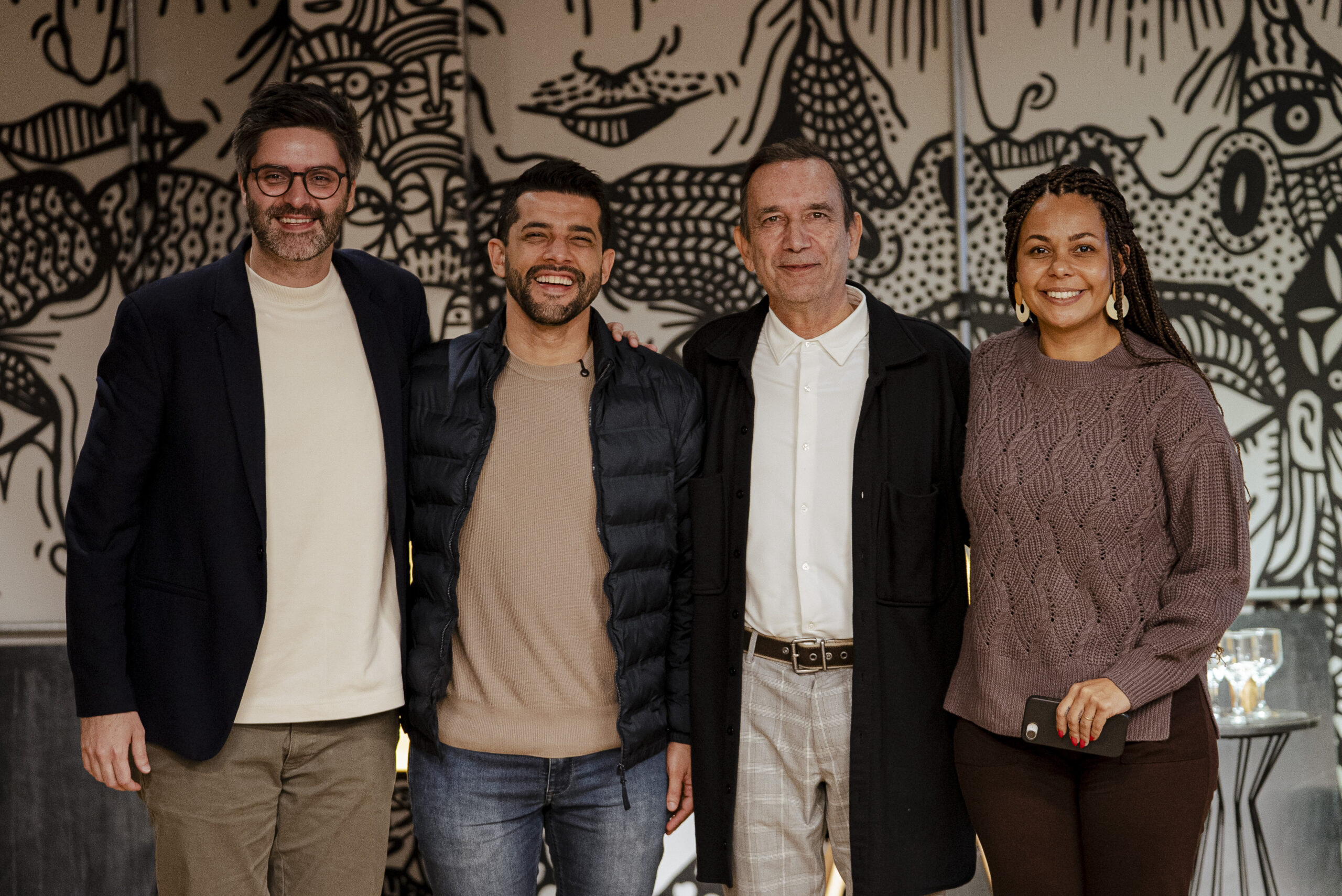
On May 18, the Humanitas360 Institute took part as an institutional supporter of the “Entrepreneurship and Nature-Based Businesses” event, promoted by the Ficus Institute in partnership with the Ministry of Entrepreneurship, Micro-enterprises and Small Businesses. Held at the social impact hub CIVI-CO in São Paulo, the event brought together entrepreneurs, researchers, government representatives and organizations from our impact ecosystem to discuss innovation, productive chains and financing mechanisms for businesses connected to natural assets.
The program was structured around three thematic panels. The first explored how biodiversity-linked markets can drive sustainable development and income generation. The second brought together specialists to discuss the technical and institutional pathways needed to build new productive chains — with a focus on Hemp —, and included the launch of a technical brief by the HempTech Brasil project on the agronomic implications of adopting the 0.3% THC limit for industrial Hemp in the country. A joint initiative of Embrapa and the Ficus Institute, HempTech Brasil is a strategic coordination platform in support of regulation, opportunity mapping and innovation in the national cannabis sector.
The discussions featured a diverse lineup of participants, including Daniel Papa Garcia, Director of Entrepreneurial Education at the Ministry of Entrepreneurship; state representative Caio França, coordinator of the Parliamentary Front for Medicinal Cannabis and Industrial Hemp in São Paulo; and Sérgio Leitão, executive director of Instituto Escolhas. The panels also included Bruno Pegoraro, president of the Ficus Institute; Daniela Bittencourt, Embrapa researcher responsible for the Cannabis and Hemp agenda; José Estan, CEO of Tropiko; and Marcelo Sertório Fernandes, founder of Ayraa EcoFriendly.
Hemp and the PDR ecosystem
The closing panel, dedicated to fostering nature-based innovation, brought together representatives from the public sector, the legislature and the philanthropic sector to discuss financing alternatives and support mechanisms for the development of businesses linked to natural assets.
Among the participants, Ricardo Anderáos, executive director of the PDR Philanthropic Fund — the maintaining fund of both the Humanitas360 Institute and the Ficus Institute — recalled the shared trajectory of both organizations and highlighted one of their most recent joint endeavors: their participation in the Venice Biennale of Architecture, in May 2025.
On that occasion, H360, the Ficus Institute and architects Pedro Mendes da Rocha and Chico Gitahy presented the installation “Ancient Innovation: Hemp, Sustainability and the Future of Architecture”, conceived especially for the 19th Biennale and built with Hemp panels, offering a concrete demonstration of the plant’s potential as a sustainable building material.
Anderáos’s remarks reinforced the alignment between the agenda discussed at the event and the long-term commitments of the PDR-supported ecosystem of organizations: to recognize Brazilian biodiversity as a driver of innovation, economic development and environmental regeneration.
The event also featured Amanda Marcante, from the Institute of Technological Research (IPT), with whom Ficus and Humanitas360 recently signed a technical cooperation agreement to work on exactly these themes — Hemp and medicinal Cannabis. The agenda also included a products fair and networking spaces for entrepreneurs and partner institutions, with the participation of the social business Tereza.