The Humanitas360 Institute has just reached a historic milestone: on June 10, 2026, the United Nations Economic and Social Council (ECOSOC) approved the recommendation of the NGO Committee to grant H360 Special Consultative Status. The news was officially communicated by the UN itself, in a letter congratulating the organization on the recognition.
What is ECOSOC?
The United Nations Economic and Social Council is the principal coordinating body for the economic, social, and related activities of the UN’s 14 specialized agencies, its technical commissions, and its five regional commissions. It is the main global forum for discussing economic and social issues and for drafting recommendations addressed to member states and the UN System.
Composed of 54 member states elected by the General Assembly, ECOSOC meets once a year in a four-week session — alternating between New York and Geneva — and works throughout the year through technical and regional commissions, thematic panels, and meetings with civil society. Its commissions include bodies dedicated to topics such as social development, the status of women, human rights, crime prevention, the environment, indigenous peoples, and much more.
Since its founding in 1945, ECOSOC has been the main channel of access for non-governmental organizations to the UN System — and the only UN body with a formal framework for NGO participation.
What does consultative status mean?
Consultative status is an accreditation system that regulates the relationship between ECOSOC and civil society organizations. It was established by Article 71 of the UN Charter and is governed by ECOSOC Resolution 1996/31.
The mechanism works in two directions: on one hand, it allows the Council to obtain information and expert advice from organizations with concrete experience in its areas of work; on the other, it offers NGOs a recognized channel to express their views and influence debates with global reach.
There are three categories of consultative status: general, special, and roster. The Special Consultative Status, granted to H360, is designated for organizations with specialized competence in specific areas of ECOSOC’s work, with meaningful engagement and consistent thematic focus.
Beyond ECOSOC and its subsidiary bodies, consultative status also allows, under certain conditions, participation in meetings of the General Assembly and other intergovernmental bodies, as well as direct engagement with the UN Secretariat.
What changes for H360
With Special Consultative Status, the Humanitas360 Institute now has an institutional channel within the UN’s main economic and social forum. This means expanded capacity to participate in international debates relevant to the issues H360 champions: civic-social entrepreneurship, drug policy reform, climate justice, and the promotion of citizenship for vulnerable populations, particularly within the prison system.
The recognition also strengthens the organization’s credibility with international partners, governments, and other civil society entities around the world, opening doors to present Brazilian and Latin American proposals and experiences in spaces that influence policy on a global scale.
H360 and the UN: a long-standing relationship
The approval of consultative status is the latest chapter in a relationship that H360 has been building with the UN since its founding in 2015.
In 2017, the video-documentary Tecendo a Liberdade (Weaving Freedom), produced by H360 and directed by Luíza Matravolgyi Damião, won the 1st UN Nelson Mandela Video Competition, an initiative of the United Nations Information Centre for Brazil (UNIC Rio). The film — which revealed the contradictions of the Brazilian prison system from a female perspective, pointing to alternatives such as social cooperativism — remains available on the UN Brazil YouTube channel and served as the basis for the feature-length documentary released in 2020.
In December 2018, H360 presented its model of social cooperatives for incarcerated people and former prisoners at UN Headquarters in New York, during the panel discussion “Behind and Beyond Bars: Innovative Solutions to Reduce Recidivism.” The event was attended by Simone Monasebian, Director of the UNODC office in New York, and Erin Trapp, Director of the Biennial of the Americas. “During the event, it became clear that the model of creating enterprises inside prisons is unique in the world and can inspire alternatives for other contexts, such as refugee camps,” said Piero Bonadeo, H360’s Vice President at the time.
In May 2022, H360 President Patrícia Villela Marino was the only Brazilian speaker at the Regenerative Cannabis Live – Regennabis event, held at UN Headquarters in New York. On that occasion, she made the case for the potential of medicinal cannabis and industrial hemp as instruments of historical reparation and economic inclusion for marginalized populations.
In November 2023, H360 and its funding organization, PDR Fundo Filantrópico, won the Catalyst 2030 Award in the Funders – Learning Leader category, sharing the stage with UN specialized agencies such as the World Tourism Organization and the UN Inter-Agency Task Force on Social and Solidarity Economy.
Now, with Special Consultative Status approved by ECOSOC, H360 takes another concrete step in this journey, consolidating its presence as a voice of Brazilian and Latin American civil society in the debates shaping the global future.
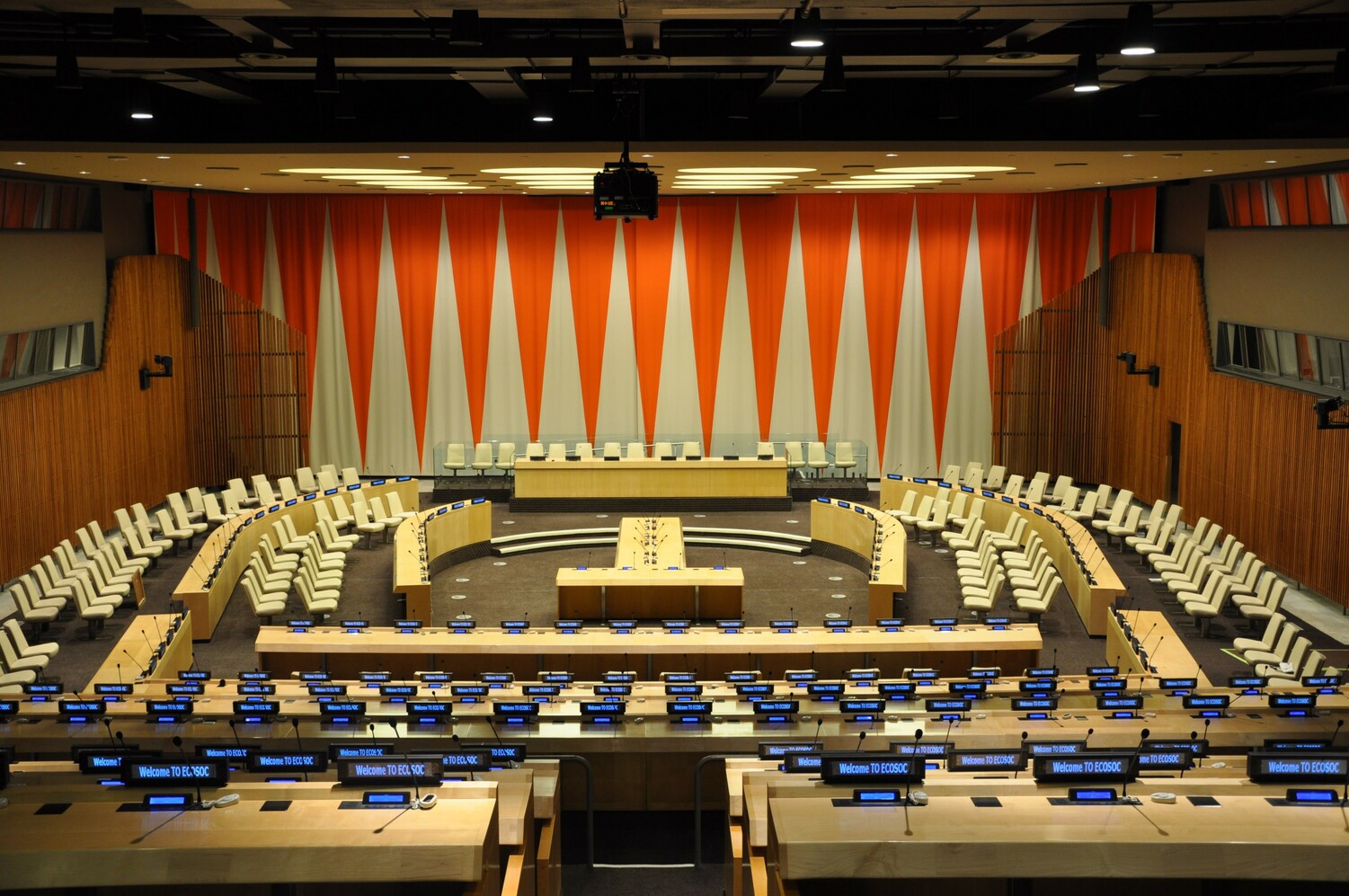
(Image credits: UN Photo/CCOI)



'/%3E%3Cpath%20fill='%23b2b2b2'%20d='M241%20382q0%2016%2017%2026%2017%2011%2042%2011t42-11q16-11%2017-26V269H241'/%3E%3Cpath%20fill='%239f7e00'%20d='M241%20379q0%2014%208%2023%209%209%2021%209%2014%200%2021-9%209-9%209-23V269h-59'/%3E%3Cpath%20d='M241%20339v-70h59v110q0%2014-9%2023l-6%205v-68h-15v72q-8%200-14-4v-68zm59%2040c0%2022%2015%2032%2029%2032%2021%200%2030-18%2030-32v-40h-59'/%3E%3Cpath%20fill='%239f7e00'%20d='M266%20277v5h2v12h-3v-5h2v-5h-9v5h2v5h-4v9h3v18h-5v10h34v-10h-5v-18h3v-9h-4v-5h2v-5h-9v5h2v5h-3v-12h2v-5zm42%20101q0%2010%206%2017%206%206%2015%207%2010-1%2016-7%206-7%206-17v-29h-43'/%3E%3Ccircle%20fill='%230044ad'%20cx='329.5'%20cy='372'%20r='6'/%3E%3Cellipse%20fill='%230044ad'%20cx='300'%20cy='340'%20rx='16'%20ry='21'/%3E%3C/svg%3E)