
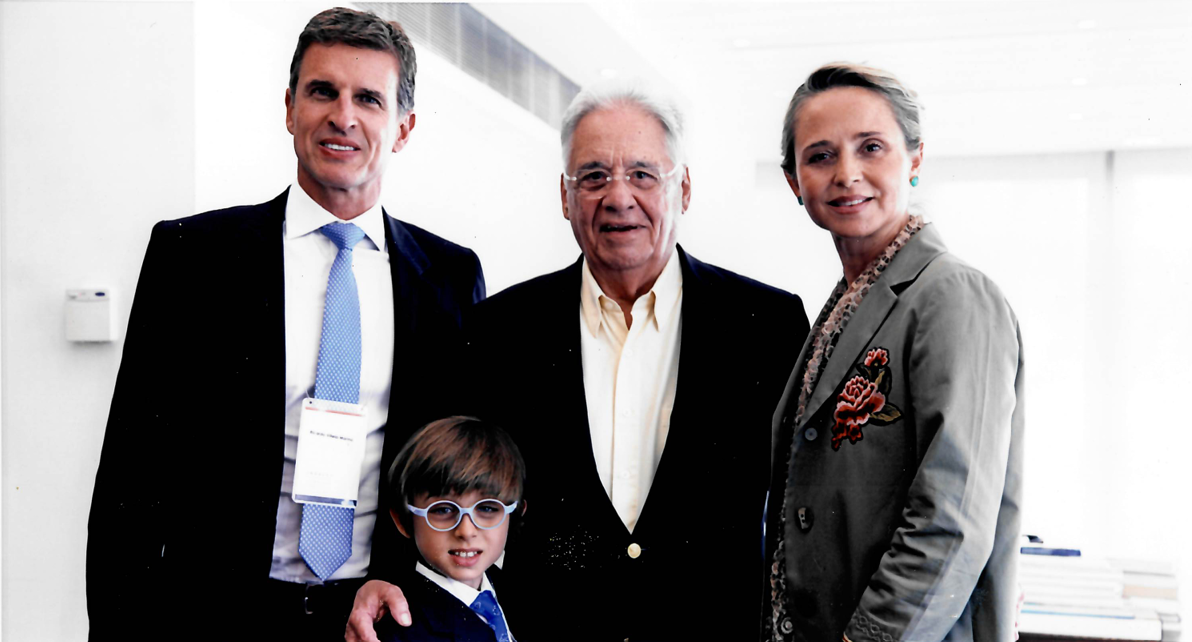
On this June 18, as former President Fernando Henrique Cardoso — first chairperson of the Humanitas360 Institute’s Board — celebrates his 95th birthday, H360 reflects on the civic friendship that bound the statesman to our president, Patrícia Villela Marino, shaping her entire philanthropic and civic journey.
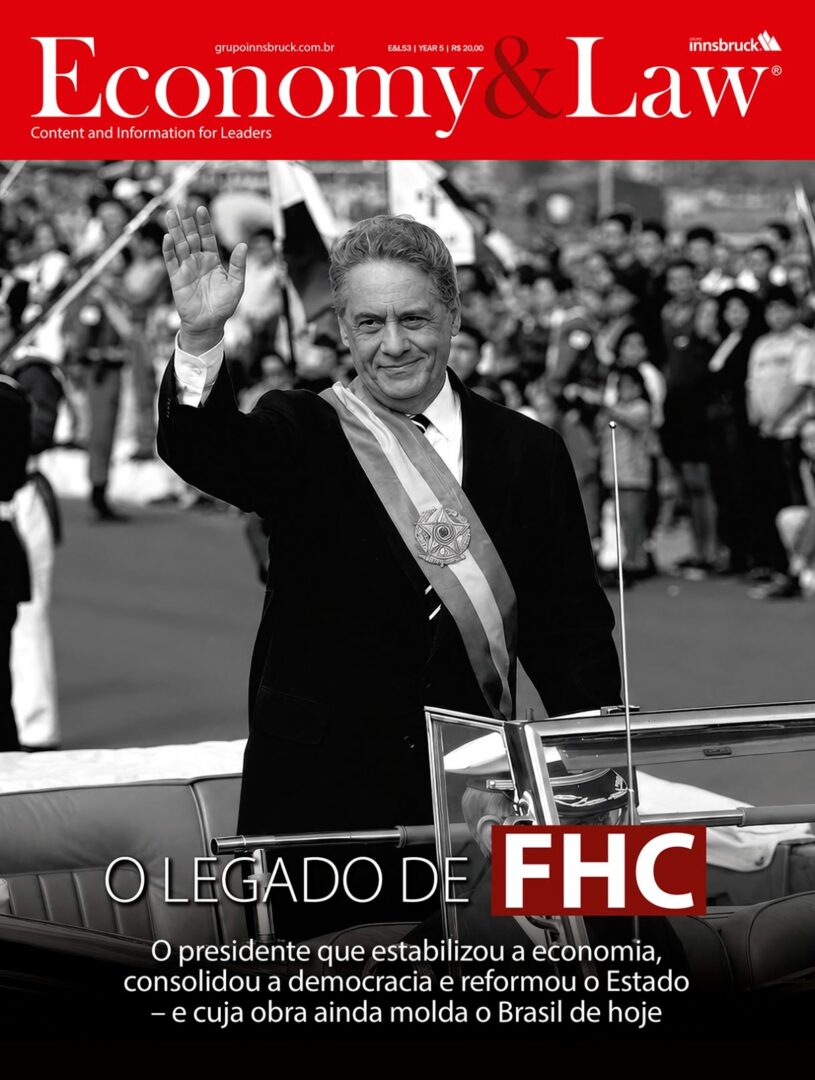
In the special edition of Economy & Law magazine dedicated to FHC’s legacy, released today, H360’s president shares a testimonial about that relationship: from their first meetings at the FHC Foundation in 2011 with young Venezuelan activists, to the invitation she received from Fernando Henrique himself to help build the Latin American Drug Policy Platform, to the founding of the Humanitas360 Institute in 2015, with the statesman serving as chairperson from the very beginning.
In the piece, Patrícia Villela Marino recalls FHC’s pioneering role in opening a frank, evidence-based debate on drug policy in Brazil and Latin America — from the documentary “Breaking the Taboo” to the creation of the Global Commission on Drug Policy — and highlights his tireless work as a bridge-builder between government, academia, and civil society, in defense of strengthening democracy in Brazil and across the region.
As Patrícia writes: “discussing public policy is not enough; we must build institutions capable of turning it into reality.”
Read the full testimonial below, and check out the complete edition at this link.
Fernando Henrique Cardoso and the Citizenship That Transforms
I was born during the dark years of the military dictatorship. I grew up hearing stories of democratic resistance, following the path of men and women who believed that Brazil could be more just, more free, and more humane. Among them, few had as profound an influence on my vision for the country as Fernando Henrique Cardoso.
Much has already been written about the president who stabilized the economy and consolidated Brazilian democracy. But Fernando Henrique’s legacy goes beyond the governments he led. As a former president, he continued to act as a statesman, building bridges between government, academia, and civil society, not only in Brazil but abroad as well. It was this dimension of his thinking that most inspired my own path over the past twenty years.
I had the honor of beginning to work with FHC in 2011, when, concerned about the erosion of democracy in Venezuela, we organized meetings at his Foundation with young activists and politicians from that country, such as David Smolansky, former mayor of El Hatillo who later went into exile in Brazil; former congresswoman Manuela Bolívar, of the Democratic Unity Roundtable (MUD); and the lawyer Yon Goicoechea.
Around the same time, Fernando Henrique led two initiatives that inspired all of my philanthropic work.
First, the documentary “Breaking the Taboo,” directed by Fernando Grostein Andrade and built on interviews with Fernando Henrique Cardoso and other Latin American former presidents, including Americans Bill Clinton and Jimmy Carter and Mexico’s Ernesto Zedillo, along with numerous other public figures. By questioning the failure of the U.S.-led “war on drugs” in the region, the film opened space for a more rational, humane public debate on public safety, health, and citizenship.
The film’s impact broadened the debate on the issue around the world, helping launch the Global Commission on Drug Policy, conceived and chaired by Fernando Henrique Cardoso to promote an informed, evidence-based debate on how to reduce the harm drugs cause to people and society.
It was in that context that I received an invitation from him that would change my life: to help build the Latin American Drug Policy Platform, an initiative also supported by former Colombian president César Gaviria. The idea was to bring together leaders, researchers, and civil society representatives to think through solutions grounded in science rather than prejudice.
That experience gave rise to a conviction that has stayed with me ever since: discussing public policy is not enough; we must build institutions capable of turning it into reality. That is how, in 2015, the Humanitas360 Institute was born, which I have led ever since.
Fernando Henrique did more than support that journey. He became Humanitas360’s chairperson from its founding. For years, the Institute’s Brazilian headquarters operated out of the Ruth Cardoso Institute, a symbol of our shared belief that organized civil society is essential to strengthening democracy. Later, we moved our Brazilian headquarters to CIVI-CO, but kept that commitment to active citizenship intact. In the United States, the Institute is based in Aspen.
Over the past decade, I have witnessed Fernando Henrique’s intellectual generosity at every stage of this journey. In one of his annual messages to Humanitas360, included in our activity reports, he wrote that “governments alone are not enough to address many of the problems eroding social cohesion.” On another occasion, he described the Institute as an “engine of citizenship and humanism.” Those words capture a worldview that remains deeply relevant today.
Fernando Henrique’s legacy does not live only in history books. It lives on in the organizations he strengthened, the debates he dared to start, and the people he inspired to turn discontent into action. I am profoundly honored to count myself among them.
Patrícia Villela Marino – Lawyer and president of the Humanitas360 Institute



'/%3E%3Cpath%20fill='%23b2b2b2'%20d='M241%20382q0%2016%2017%2026%2017%2011%2042%2011t42-11q16-11%2017-26V269H241'/%3E%3Cpath%20fill='%239f7e00'%20d='M241%20379q0%2014%208%2023%209%209%2021%209%2014%200%2021-9%209-9%209-23V269h-59'/%3E%3Cpath%20d='M241%20339v-70h59v110q0%2014-9%2023l-6%205v-68h-15v72q-8%200-14-4v-68zm59%2040c0%2022%2015%2032%2029%2032%2021%200%2030-18%2030-32v-40h-59'/%3E%3Cpath%20fill='%239f7e00'%20d='M266%20277v5h2v12h-3v-5h2v-5h-9v5h2v5h-4v9h3v18h-5v10h34v-10h-5v-18h3v-9h-4v-5h2v-5h-9v5h2v5h-3v-12h2v-5zm42%20101q0%2010%206%2017%206%206%2015%207%2010-1%2016-7%206-7%206-17v-29h-43'/%3E%3Ccircle%20fill='%230044ad'%20cx='329.5'%20cy='372'%20r='6'/%3E%3Cellipse%20fill='%230044ad'%20cx='300'%20cy='340'%20rx='16'%20ry='21'/%3E%3C/svg%3E)